


The DUTCH Test and Estrogen Metabolism: What Women Should Know About Breast Health
I attended a seminar by a breast surgeon and was so improessed by her Functional Health approach! She does the DUTCH test on all her breast cancer patients to understand their unique way they process estrogen.
Understanding your estrogen pathways may add another piece to the hormone health puzzle—but here’s what the science really tells us.
Have you ever wondered whether the way your body processes estrogen could influence your long-term health?
Estrogen plays an essential role in women’s health, supporting bone strength, brain function, cardiovascular health, and reproductive function.
But estrogen metabolism is complex, and researchers continue to investigate how different estrogen metabolites may influence the development of hormone-sensitive cancers, including some types of breast cancer.
For women in perimenopause, menopause, and beyond, understanding hormone health is an important part of a proactive approach to aging well.
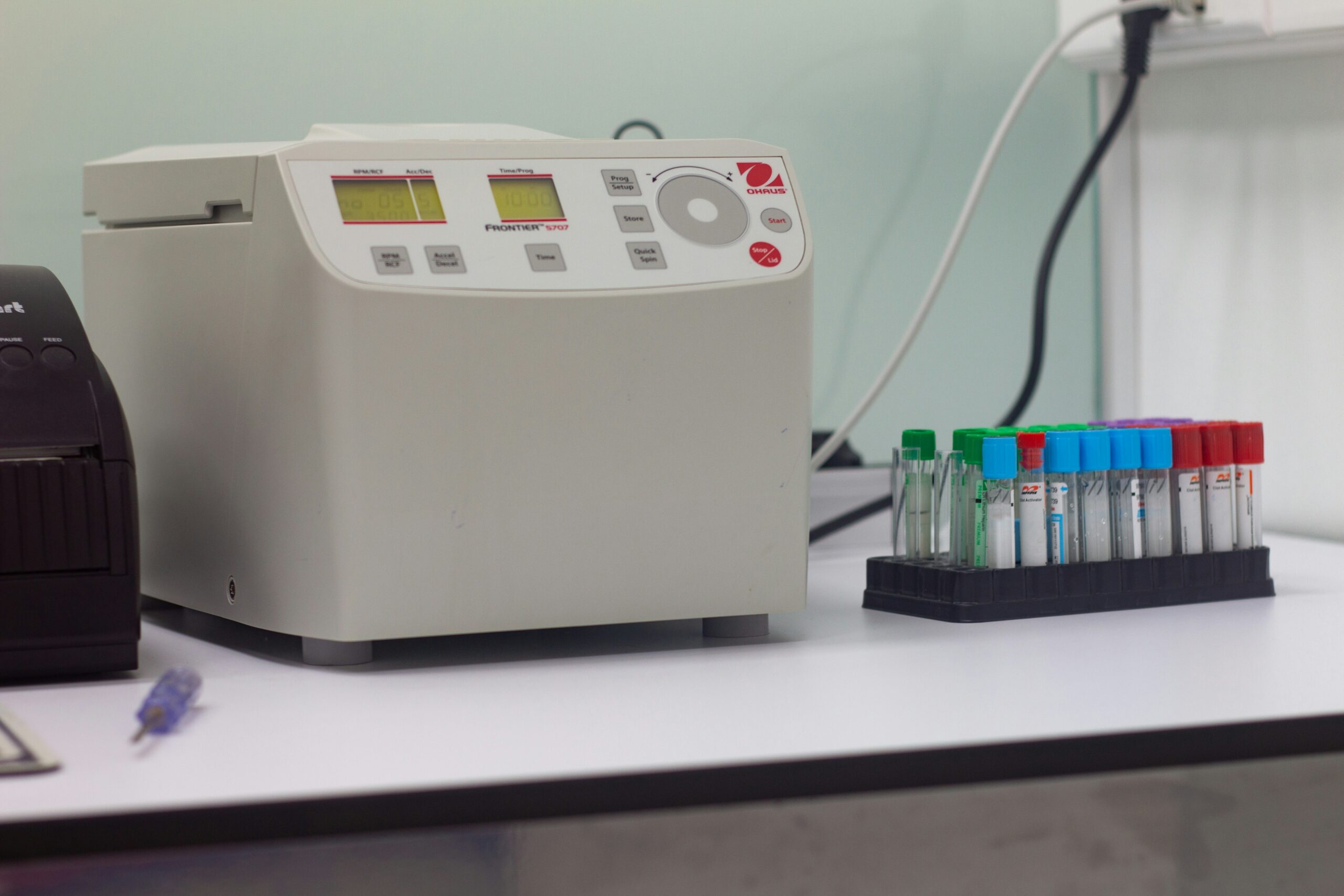
DUTCH Test (Dried Urine Test for Comprehensive Hormones)
One test generating interest in functional medicine is the DUTCH Test (Dried Urine Test for Comprehensive Hormones)
It measures hormones and their metabolites, providing a snapshot of how the body produces and processes certain hormones.
Let’s explore what it measures, what the research suggests, and how women can use hormone information responsibly as part of a comprehensive health strategy.
What Is the DUTCH Test?
The DUTCH test analyzes dried urine samples to measure hormone levels and hormone metabolites.
Depending on the panel, it can provide information about estrogen, progesterone, testosterone, cortisol, and other hormones.
One area of interest is estrogen metabolism: the pathways the body uses to break down estrogen so its metabolites can ultimately be eliminated.
The test measures several estrogen metabolites, including those associated with three major metabolic pathways:
- 2-hydroxylation,
- 4-hydroxylation, and
- 16-hydroxylation.
It also provides information about certain methylated estrogen metabolites.
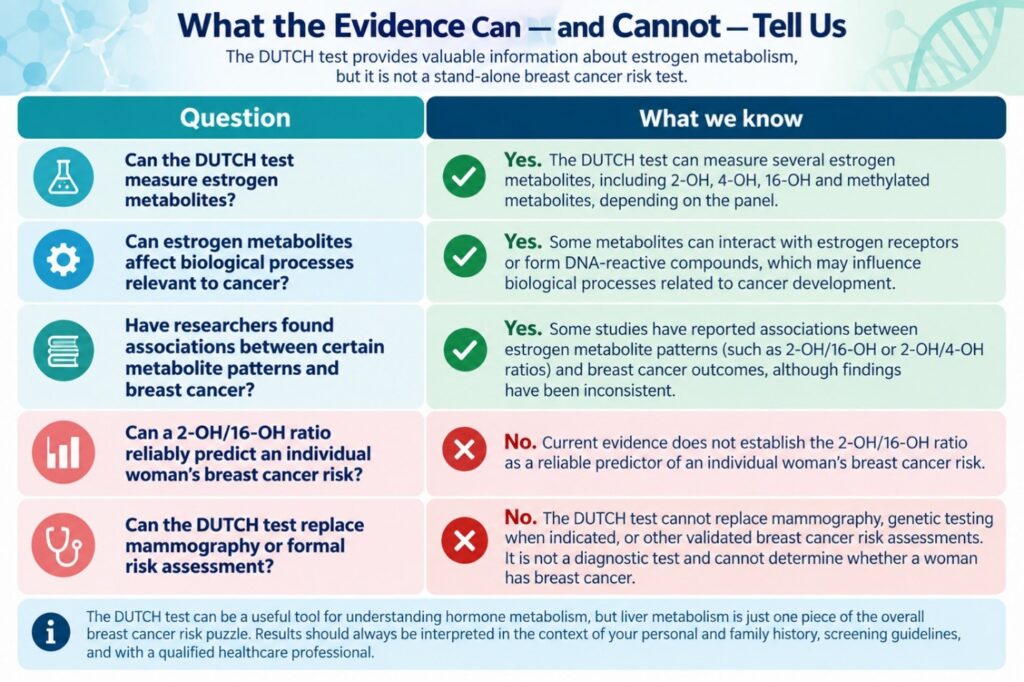
These measurements can help a qualified healthcare practitioner explore patterns of hormone metabolism. However, the DUTCH test has not been validated as a stand-alone breast cancer risk assessment tool, and it cannot determine whether a woman has breast cancer.
Understanding the Three Estrogen Metabolism Pathways
Estrogen is not simply a hormone that is either high or low. How the body processes it also matters biologically.
PHASE 1 ESTROGEN METABOLISM
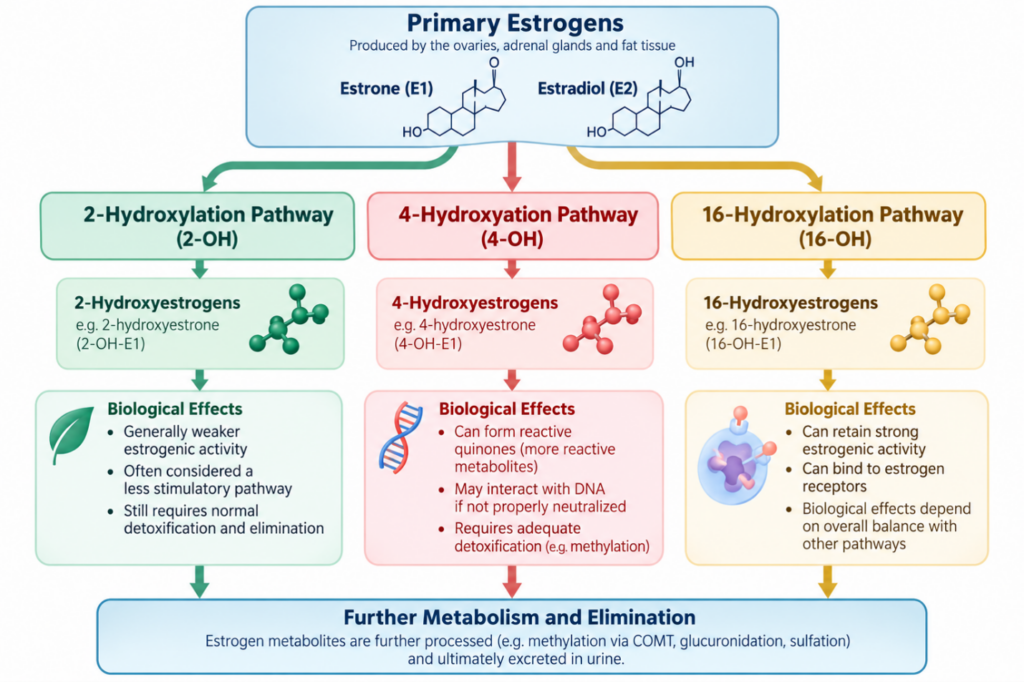
During phase 1 estrogen metabolism, enzymes convert estrone and estradiol into different metabolites. These products have different biological properties, including different abilities to interact with estrogen receptors and participate in reactions that can affect DNA.
Here are the three pathways commonly discussed when interpreting estrogen metabolism.
1. The 2-OH pathway: 2-hydroxy estrogen metabolites
The 2-hydroxylation pathway produces metabolites such as 2-hydroxyestrone (2-OH-E1).
These metabolites generally have weaker estrogen-receptor activity than the original hormones and are often considered less estrogenic. However, they are not entirely harmless: under certain conditions, they can also form reactive compounds.
The amount produced, the balance with other metabolites, and how effectively the body processes the products all matter.
2. The 4-OH pathway: 4-hydroxy estrogen metabolites
The 4-hydroxylation pathway produces metabolites such as 4-hydroxyestrone (4-OH-E1).
These metabolites can be converted into reactive compounds called quinones. If not adequately neutralized, some of these compounds can interact with DNA and potentially contribute to DNA damage.
This is one reason researchers have investigated the relationship between estrogen metabolism and hormone-sensitive cancers.
The key point is that the biological potential for DNA damage does not mean that an elevated urinary metabolite automatically translates into an individual’s breast cancer risk.
3. The 16-OH pathway: 16-hydroxy estrogen metabolites
The 16-hydroxylation pathway produces metabolites such as 16-hydroxyestrone (16-OH-E1).
These metabolites can retain estrogenic activity and interact with estrogen receptors. Researchers have explored whether differences in this pathway are associated with breast cancer risk, but findings have not consistently supported using this pathway alone—or a simple metabolite ratio—to predict who will develop breast cancer.
The effects of estrogen depend on much more than a single metabolite measurement.
The Three Estrogen Metabolism Pathways
The following simplified diagram illustrates how the pathways branch from the body’s primary estrogens.
What Does the DUTCH Test Tell Us About Breast Cancer Risk?
This is where it is important to distinguish promising biological research from a clinically validated risk assessment.
Studies have investigated whether the balance between 2-OH and 16-OH metabolites, as well as the balance between 2-OH and 4-OH metabolites, is associated with breast cancer outcomes.
Some studies have reported associations between estrogen metabolite patterns and cancer risk.
However, findings vary across studies, and a systematic review of the commonly studied 2-OH/16-OH ratio found that the evidence did not establish it as a reliable predictor of breast cancer.
A large study of postmenopausal women also found that many apparent associations between estrogen metabolites and breast cancer were no longer statistically significant after accounting for unconjugated estradiol, although some other metabolic ratios remained associated with risk.
These findings highlight an important distinction: a biomarker may be biologically interesting or associated with disease in a population without being accurate enough to predict an individual woman’s future risk.
Consequently, the DUTCH test should not be used to label a woman as having high or low breast cancer risk based on her estrogen pathway percentages alone.
Why Estrogen Methylation Matters
After phase 1 metabolism, the body uses additional processes to further metabolize and eliminate estrogen compounds. One of these processes is methylation, which can convert catechol estrogens such as 2-OH and 4-OH metabolites into methoxy metabolites.
The enzyme catechol-O-methyltransferase (COMT) participates in this process.
The DUTCH test can provide information about certain methylated metabolites and related ratios. These results may help a qualified practitioner understand aspects of estrogen metabolism.
However, a methylation ratio is not a direct measurement of all detoxification capacity, and it is not a validated breast cancer screening marker. It should be interpreted alongside the wider clinical picture rather than in isolation.

The Bottom Line
Understanding estrogen metabolism is an interesting and evolving area of women’s health research. The DUTCH test can measure several estrogen metabolites and offer insight into how the body processes hormones.
But no single estrogen pathway, methylation ratio, or urine hormone test can tell a woman whether she will develop breast cancer.
The most empowering strategy is to combine
- Knowing your own breasts by regular self exam
- Appropriate screening
- Individualized assessment of established risk factors
- Evidence-informed lifestyle choices
- Thoughtful conversations with healthcare professionals.
Knowledge is powerful when it is interpreted in the right context.
By understanding what hormone testing can—and cannot—tell us, women can make more informed decisions about their health through perimenopause, menopause, and beyond.
Medical Disclaimer
This article is for educational purposes only and is not intended to diagnose, treat, cure, or prevent breast cancer or any other medical condition. The DUTCH test is not a validated stand-alone breast cancer risk assessment or screening test. Discuss breast cancer risk, screening, hormone testing, and treatment decisions with a qualified healthcare professional.