


Why understanding your personal risk, supporting metabolic health, and making informed lifestyle choices can help you take a more proactive approach to lifelong wellness.
When it comes to breast health, most women think about one thing: their annual mammogram.
And for good reason.
Mammography is an important tool for detecting breast cancer early.
But taking care of your breast health involves more than keeping up with your screening appointments.
Your age, family history, genetics, hormone exposure, lifestyle habits, and overall health all contribute to your individual health picture. Understanding these factors can help you have more informed conversations with your healthcare provider and make choices that support your long-term well-being.
As a functional health coach, I believe in looking at the bigger picture. Rather than focusing on a single symptom, hormone level, or test result, we can explore how different aspects of our health work together.
While no lifestyle program, supplement, or hormone test can guarantee that you will avoid breast cancer, there are meaningful steps you can take to understand your risk and support your health.
Here are five ways to become a more proactive partner in your breast health.

1. Understand Your Personal and Family History
Your breast health journey begins with understanding your unique risk factors.
Breast cancer risk is not the same for every woman. Some factors are beyond our control, while others may be influenced by lifestyle choices or medical decisions.
Important risk factors include:
- Age: The risk of breast cancer generally increases as women get older.
- Family history: Having a mother, sister, daughter, or other close relative with breast cancer—particularly at a younger age—may increase your risk.
- Genetics: Inherited variants in genes such as BRCA1 and BRCA2, as well as certain other genes, can substantially increase risk.
- Breast density: Dense breast tissue can increase breast cancer risk and make some cancers more difficult to detect on a mammogram.
- Reproductive and hormonal history: Factors such as age at first menstruation, age at menopause, and certain hormone therapy exposures can influence risk.
- Previous breast conditions: Certain high-risk breast lesions or a history of breast cancer may increase the likelihood of developing breast cancer.
What can you do?
Start by learning your family history. Ask relatives about breast cancer and other relevant cancers, including ovarian, pancreatic, and prostate cancer. Note which relatives were affected and approximately how old they were when diagnosed.
If you have a strong family history, a known inherited gene variant, or other indicators of elevated risk, ask your healthcare provider whether a formal risk assessment or genetic counseling would be appropriate.
Remember: Knowing your risk does not mean you will develop breast cancer. It gives you and your healthcare team an opportunity to make more informed decisions about screening and prevention.
2. Stay Up to Date With Recommended Breast Cancer Screening
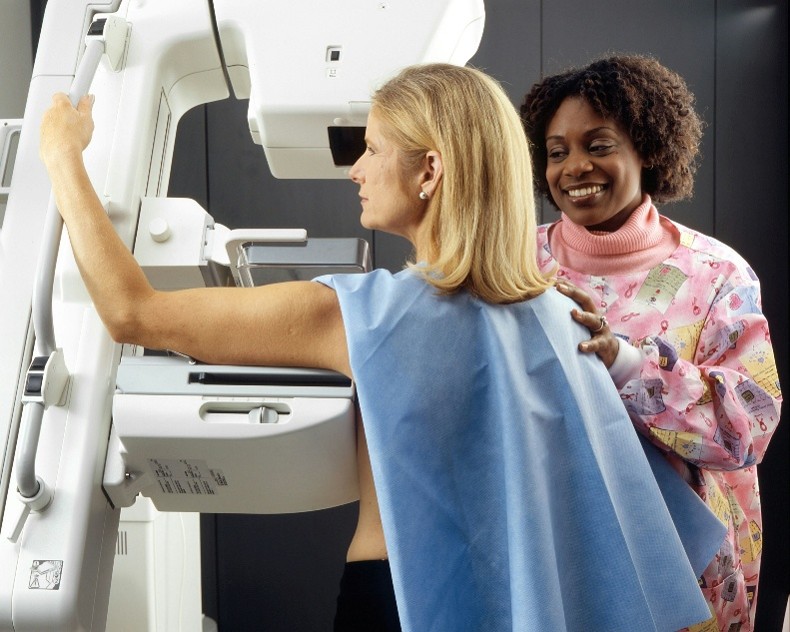
Early detection matters—and screening should be personalized to your needs.
Mammography remains a cornerstone of breast cancer screening because it can identify abnormalities before they are large enough to feel.
However, the appropriate screening schedule depends on your age, personal history, breast density, family history, and overall risk.
For example, the American Cancer Society recommends that women at average risk have the option to begin annual mammography at ages 40–44, recommends annual screening for women ages 45–54, and allows women 55 and older to transition to screening every two years or continue annually. Screening should continue while a woman is in good health and has a life expectancy of at least 10 years.
Other organizations have different recommendations, so discuss which approach is appropriate for you.
Women at higher risk may benefit from additional screening, such as breast MRI, alongside mammography.
Don’t ignore changes in your breasts
Screening is important, but it is not a substitute for paying attention to your body.
BREAST SELF EXAM IS SO IMPORTANT
Contact your healthcare provider if you notice:
- A new lump or thickening in your breast or underarm.
- A change in breast size, shape, or appearance.
- New skin dimpling, redness, or changes resembling an orange peel.
- Nipple inversion that is new or unusual for you.
- Unexplained nipple discharge, particularly bloody discharge.
Many breast changes are not cancerous, but new or persistent changes deserve medical evaluation even if your last mammogram was normal.
Your takeaway: Keep your screening appointments, know what is normal for your body, and discuss any concerns promptly with your healthcare provider.
3. Support Your Metabolic Health Through Everyday Lifestyle Choices

The habits that support healthy aging can also contribute to a more proactive approach to breast health.
Although no diet or lifestyle routine can eliminate breast cancer risk, research indicates that certain modifiable factors matter. Physical activity, alcohol consumption, and excess body fat after menopause are among the factors associated with breast cancer risk.
The goal is not perfection. It is to build sustainable habits that support your health over time.
Move your body consistently
Regular physical activity supports cardiovascular health, insulin sensitivity, muscle strength, and healthy body composition.
Aim for at least 150 minutes of moderate-intensity aerobic activity each week, or 75 minutes of vigorous activity, together with muscle-strengthening exercises at least twice weekly, as appropriate for your health and fitness level.
Walking, swimming, cycling, dancing, resistance training, and pickleball can all be ways to stay active.
Choose activities you enjoy so movement becomes a regular part of your lifestyle.
Maintain healthy body composition
After menopause, changes in estrogen production and body composition can make weight management more challenging.
Excess body fat after menopause is associated with an increased risk of hormone receptor-positive breast cancer. Supporting muscle mass, engaging in regular strength training, eating nourishing foods, and getting adequate sleep can help maintain metabolic health and healthy body composition.
Focus on strength, energy, mobility, and long-term well-being rather than the number on the scale alone.
Limit alcohol
Alcohol consumption is an established risk factor for breast cancer, and risk generally increases with greater intake.
If you drink alcohol, consider reducing how often and how much you consume. Avoiding alcohol is an option for women who wish to minimize alcohol-related cancer risk.
Build a nutrient-rich eating pattern
Rather than searching for a single breast-health superfood, focus on your overall dietary pattern.
Include plenty of:
- Colorful vegetables and fruit for fiber, vitamins, minerals, and beneficial plant compounds.
- Cruciferous vegetables such as broccoli, cauliflower, cabbage, and Brussels sprouts as part of a varied diet.
- Fiber-rich foods such as beans, lentils, oats, and whole grains to support digestive and metabolic health.
- Quality protein sources such as fish, eggs, legumes, poultry, and other foods suited to your needs.
- Healthy fats from sources such as olive oil, nuts, seeds, and avocado.
A balanced eating pattern can support healthy weight management and overall metabolic health. However, no specific food, detox program, or supplement has been proven to prevent breast cancer.
Don’t overlook sleep and stress management
Consistent sleep, relaxation practices, social connection, and time outdoors can support overall health and help you feel your best.
These habits are valuable parts of healthy aging, even though their direct effects on breast cancer risk are less clearly established than those of factors such as alcohol intake and postmenopausal excess body fat.
Your takeaway: Focus on the habits you can influence. Small, consistent choices are more sustainable than restrictive diets or complicated wellness routines.
4. Review Your Hormones and Menopausal Hormone Therapy Thoughtfully
Hormones are an important part of women’s health, but more testing is not always better.
Estrogen influences many tissues throughout the body, including breast tissue. During perimenopause and menopause, hormonal changes can contribute to symptoms such as hot flashes, sleep disturbances, changes in mood, and vaginal dryness.
It is natural to wonder whether your hormone levels are affecting your breast health.
The answer requires nuance.
Breast cancer risk can be influenced by the type, duration, and timing of hormone exposure. For example, combined estrogen-progestogen menopausal hormone therapy has been associated with an increased breast cancer risk that generally rises with longer use. Estrogen-only therapy has a different risk profile and is generally considered only for women without a uterus, with individualized assessment.
The benefits and risks of hormone therapy depend on your medical history, symptoms, age, treatment formulation, and other individual factors.
What about estrogen metabolism?
Your body processes estrogen through several metabolic pathways. Researchers have studied whether differences in these pathways may be associated with breast cancer development.
This is one reason tests such as the DUTCH test have attracted interest in functional medicine.
The DUTCH test measures various hormones and estrogen metabolites in urine, including metabolites associated with the 2-OH, 4-OH, and 16-OH pathways. These measurements may provide information about aspects of hormone metabolism.
However, current evidence does not establish the DUTCH test as a reliable stand-alone tool for predicting an individual woman’s breast cancer risk.
A particular estrogen metabolite pattern does not mean you will develop breast cancer, and a seemingly favorable pattern does not mean your risk is low.
What should you do?
If you are experiencing menopausal symptoms or considering hormone therapy:
- Discuss the potential benefits and risks of treatment with a qualified healthcare professional.
- Review your personal and family history, including any previous breast conditions.
- Ask whether your screening schedule is appropriate for your individual risk.
- Avoid starting, stopping, or changing prescribed hormones based solely on a hormone test result.
Your takeaway: Hormone health deserves thoughtful attention, but hormone testing should answer a meaningful clinical question rather than create unnecessary worry or false reassurance.
5. Use Functional Testing for the Right Purpose
Personalized health is about asking better questions—not ordering every available test.
Functional health approaches often emphasize understanding patterns across nutrition, lifestyle, metabolism, hormones, and other aspects of well-being.
For women experiencing persistent fatigue, sleep disturbances, changes in mood, or other symptoms, an individualized evaluation may help identify contributing factors.
Depending on the clinical situation, a healthcare professional may consider selected laboratory tests to investigate issues such as anemia, thyroid dysfunction, nutritional deficiencies, or other potential causes of symptoms.
Hormone testing may also be useful in selected circumstances. The appropriate test depends on the clinical question, and routine hormone testing is not necessary for every woman
DUTCH Test (Dried Urine Test for Comprehensive Hormones)
Where does the DUTCH test fit?
The DUTCH test may offer additional information about hormone levels and estrogen metabolism. A qualified practitioner can discuss what the results measure, their limitations, and whether they are relevant to your particular concerns.
However, the DUTCH test does not diagnose breast cancer, establish an individual’s breast cancer risk, or replace mammography, genetic counseling when indicated, or validated risk assessment tools.
If your concern is breast cancer risk, ask your healthcare provider about an established risk assessment that incorporates relevant personal and family history. Depending on your circumstances, this may help determine whether additional screening or genetic evaluation is appropriate.
The most useful test is not necessarily the most comprehensive one. It is the test that answers the right question and leads to an appropriate next step.
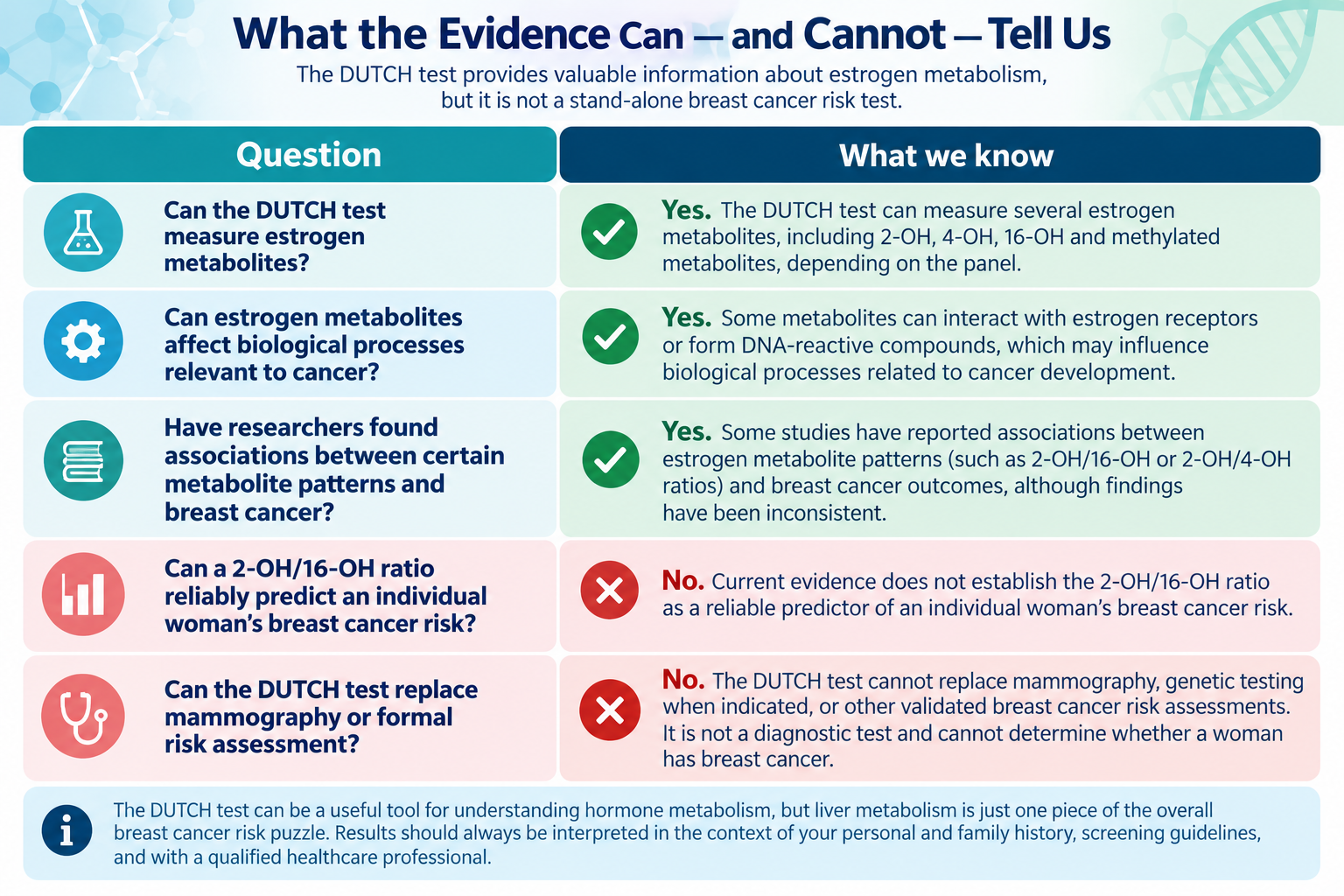
Your takeaway: Use functional testing to support individualized care—not as a substitute for evidence-based screening, diagnosis, or treatment.
Your Breast Health Action Plan
You do not need to change everything at once. Start with a few practical steps and build from there.
- Review your family history and discuss any concerns with your healthcare provider.
- Confirm that your breast cancer screening schedule is appropriate for your age and risk.
- Aim for regular aerobic activity and strength training.
- Build a balanced, fiber-rich eating pattern that supports healthy body composition.
- Review alcohol intake and consider reducing or avoiding it.
- Discuss menopausal hormone therapy and any hormone testing in the context of your personal health history.
- Seek prompt medical evaluation for new or unusual breast changes.
The Bottom Line: Knowledge Is Power
Taking charge of your breast health means looking beyond a single appointment or laboratory result.
It means understanding your personal risk, keeping up with recommended screening, supporting your metabolic health, making informed decisions about hormone therapy, and working with healthcare professionals who understand both your individual needs and the evidence behind your options.
There is no guaranteed way to prevent breast cancer. But there are meaningful ways to become more informed, recognize potential concerns earlier, and make choices that support your health as you age.
You deserve an approach to wellness that is proactive, personalized, and grounded in science.
Start with one step today. Your future health is worth the attention.
Medical Disclaimer
This article is for educational purposes only and is not intended to diagnose, treat, cure, or prevent any disease. Lifestyle measures and hormone testing cannot guarantee protection against breast cancer. The DUTCH test is not a validated stand-alone breast cancer risk assessment or screening test. Consult a qualified healthcare professional about your individual risk factors, recommended screening, hormone therapy, and medical concerns.
References and Further Reading
- American Cancer Society: Breast Cancer Screening Recommendations
- National Cancer Institute: Breast Cancer Prevention
- National Cancer Institute: Breast Cancer Risk Factors
- National Cancer Institute: Menopausal Hormone Therapy and Cancer Risk
- American Cancer Society: Breast Cancer Risk and Prevention
- Peer-reviewed review: The 2-hydroxyestrone to 16α-hydroxyestrone ratio and breast cancer risk