


Women and Alzheimer's: Why Are We at Higher Risk and What Can Be Done?
Understanding the biological, hormonal, and lifestyle factors influencing women’s brain health—and the steps we can take today to protect our memory and support healthy cognitive aging.
Forgetting where you put your keys, walking into a room and forgetting why you went there, or occasionally struggling to remember someone’s name can happen to anyone. But when it comes to Alzheimer’s disease, there is a much bigger conversation we need to have about women’s brain health.
Did you know that women account for nearly two-thirds of Americans living with Alzheimer’s disease?
Alzheimer’s is not simply an inevitable consequence of getting older. While age remains the greatest known risk factor, research suggests that biological differences, hormonal changes, genetics, and lifestyle factors may all contribute to why women are disproportionately affected.
For women navigating perimenopause, menopause, and the decades beyond, understanding these connections is particularly important.

Although we cannot control every risk factor, we can influence many of the factors that contribute to long-term brain health.
Let’s explore why women may be more vulnerable to Alzheimer’s and, more importantly, what we can do to support a healthier brain as we age.
Why Are Women at Higher Risk of Alzheimer’s?
Alzheimer’s disease is a progressive brain disorder associated with changes in memory, thinking, and behavior. It is the most common cause of dementia.
Women have a higher lifetime risk of developing Alzheimer’s than men. Several factors may help explain this difference.
Biological differences and longevity
Longevity
Women generally live longer than men, and age is the strongest known risk factor for Alzheimer’s. Because women, on average, have greater life expectancy, more women reach the ages when Alzheimer’s becomes increasingly common.
However, longevity does not explain the entire difference.
Biological
One of the most interesting areas of research involves estrogen and its relationship with brain health.
Estrogen does much more than regulate the reproductive system. It also plays important roles in the brain, including:
- Supporting communication between brain cells.
- Influencing memory and learning.
- Supporting mitochondrial function and cellular energy production.
- Helping regulate inflammation and oxidative stress.
- Influencing the brain’s ability to adapt and form new connections.
During perimenopause and menopause, estrogen levels fluctuate and eventually decline.
Researchers are investigating whether this hormonal transition may contribute to changes in brain metabolism and vulnerability to Alzheimer’s-related processes.
This does not mean menopause causes Alzheimer’s. Rather, it highlights why midlife may be an important window for women to pay attention to brain health.

1. Know Your Genetics
The APOE ε4 gene variant is an important genetic risk factor for late-onset Alzheimer’s disease. Research suggests its relationship with Alzheimer’s risk may differ between women and men.
Other contributors include cardiovascular disease, insulin resistance, high blood pressure, poor sleep, chronic stress, and physical inactivity.
The important message: Alzheimer’s risk is influenced by multiple interacting factors—not just one gene, one hormone, or one lifestyle habit.
2 Understand the Menopause-Brain Connection: Why Estrogen Matters
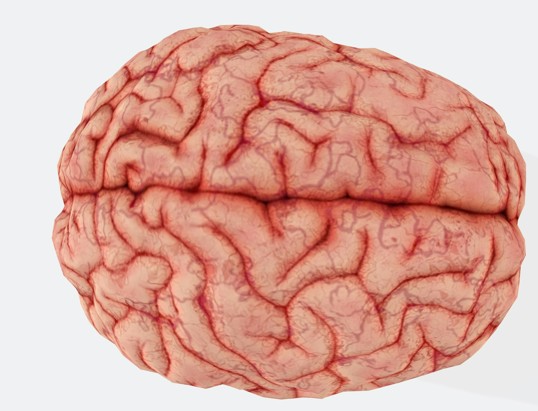
Have you ever experienced brain fog, difficulty concentrating, or moments when your memory doesn’t seem as sharp during menopause?
You’re not imagining it.
Many women report changes in memory, attention, and mental clarity during the menopause transition.
Estrogen receptors are found throughout the brain, including areas involved in memory, learning, and emotional regulation.
Estrogen also influences how the brain uses glucose for energy. During the menopause transition, changes in estrogen availability may be associated with changes in brain energy metabolism.
This is one reason researchers are investigating the relationship between menopause, brain aging, and Alzheimer’s risk.
Does hormone replacement therapy prevent Alzheimer’s?
This is an important question, particularly for women considering menopausal hormone therapy.
The answer is not straightforward.
Although estrogen has important effects on the brain, current evidence does not establish menopausal hormone therapy as a way to prevent Alzheimer’s disease.
Research suggests that timing, age, type of hormone therapy, and individual health history may influence outcomes.
Hormone therapy may be appropriate for certain women to manage menopausal symptoms and other indications, but it should not be started solely to prevent dementia.
Discuss the potential benefits and risks with a qualified healthcare professional.
You may have heard Alzheimer’s disease referred to as “Type 3 diabetes.”
Although this is not an official medical diagnosis, the term reflects growing research into the relationship between insulin resistance, glucose metabolism, and brain health.
Your brain requires a constant supply of energy to function properly. Glucose is its primary energy source.
However, when the body becomes insulin resistant, metabolic health can deteriorate. Insulin signaling also plays important roles in the brain.
Research has linked type 2 diabetes and metabolic dysfunction with an increased risk of cognitive decline and dementia.
This makes metabolic health an important part of a brain-health strategy.
What can you do?
- Prioritize protein and fiber at meals.
- Reduce highly processed foods and excess added sugars.
- Include healthy fats from olive oil, nuts, seeds, and avocados.
- Exercise regularly to improve insulin sensitivity.
- Maintain a healthy waist circumference.
- Monitor blood glucose and HbA1c with your healthcare provider.
Remember, supporting metabolic health is not just about weight management. It is also about supporting the blood vessels, energy systems, and metabolic processes that help your brain function.
3. Insulin Resistance and Brain Health: Is There a Connection?

You may have heard Alzheimer’s disease referred to as “Type 3 diabetes.”
Although this is not an official medical diagnosis, the term reflects growing research into the relationship between insulin resistance, glucose metabolism, and brain health.
Your brain requires a constant supply of energy to function properly. Glucose is its primary energy source.
However, when the body becomes insulin resistant, metabolic health can deteriorate. Insulin signaling also plays important roles in the brain.
Research has linked type 2 diabetes and metabolic dysfunction with an increased risk of cognitive decline and dementia.
This makes metabolic health an important part of a brain-health strategy.
What can you do?
- Prioritize protein and fiber at meals.
- Reduce highly processed foods and excess added sugars.
- Include healthy fats from olive oil, nuts, seeds, and avocados.
- Exercise regularly to improve insulin sensitivity.
- Maintain a healthy waist circumference.
- Monitor blood glucose and HbA1c with your healthcare provider.
Remember, supporting metabolic health is not just about weight management. It is also about supporting the blood vessels, energy systems, and metabolic processes that help your brain function.
4. Nutrition: Feed Your Brain What It Needs

Your brain is one of the most metabolically active organs in your body. It requires a steady supply of nutrients to support communication between neurons, energy production, and cellular repair.
A nutrient-rich eating pattern is one of the most practical ways to support long-term brain health.
Here are some important nutritional priorities.
- Omega-3 fatty acids
Omega-3 fatty acids, particularly DHA, are important structural components of brain cell membranes.
Include:
- Wild salmon.
- Sardines.
- Mackerel.
- Chia seeds.
- Flaxseeds.
- Walnuts.
- Antioxidant-rich foods
Oxidative stress can damage cells and is involved in processes associated with brain aging.
Colorful plant foods provide antioxidants and beneficial phytonutrients.
Include:
- Blueberries and strawberries.
- Dark leafy greens.
- Broccoli.
- Red cabbage.
- Beets.
- Green tea.
- B vitamins
B vitamins, particularly B6, B12, and folate, support normal neurological function and help regulate homocysteine, an amino acid in the blood.
Elevated homocysteine has been associated with increased cardiovascular and cognitive risk, although lowering it with supplements has not consistently been shown to prevent Alzheimer’s.
Include:
- Leafy green vegetables.
- Eggs.
- Legumes.
- Fish.
- Poultry.
- Fortified foods where appropriate.
Pay particular attention to vitamin B12, especially as absorption can become less efficient with age.
- Healthy fats
Your brain contains a substantial amount of fat, making healthy dietary fats an important part of a balanced eating pattern.
Choose:
- Extra virgin olive oil.
- Avocados.
- Nuts.
- Seeds.
- Fatty fish.
- Protein
Adequate protein supports muscle maintenance, metabolic health, and healthy aging.
Include quality protein sources throughout the day, such as fish, eggs, poultry, Greek yogurt, legumes, and tofu.
Consider the MIND diet
The MIND diet combines principles of the Mediterranean diet and DASH eating pattern. It emphasizes leafy greens, berries, whole grains, beans, nuts, fish, and olive oil while limiting foods high in saturated fats and highly processed foods.
Research has associated greater adherence to this eating pattern with better cognitive outcomes, although it has not been proven to prevent Alzheimer’s.
5. Exercise: One of the Best Investments in Your Brain

If there is one lifestyle habit I would encourage every woman to prioritize for healthy aging, it is regular physical activity.
Exercise benefits far more than your muscles and waistline. It supports your cardiovascular system, circulation, insulin sensitivity, mood, and brain health.
Research has consistently associated physical activity with a lower risk of cognitive decline.
Here are five ways to make movement part of your brain-health routine:
- Aerobic exercise: Walking, swimming, cycling, and dancing help support cardiovascular fitness and blood flow to the brain.
- Strength training: Building and maintaining muscle supports metabolic health, balance, and independence as we age.
- Balance exercises: Yoga, tai chi, and balance training help maintain coordination and reduce fall risk.
- Daily movement: Break up prolonged sitting with short walks and movement breaks.
- Outdoor activity: Combine physical movement with time in nature to support mood and reduce stress.
Aim for at least 150 minutes of moderate-intensity aerobic activity each week, along with strength training at least twice weekly, as appropriate for your fitness and health.
Remember, you don’t have to become an athlete. Consistency is more important than intensity.
6. Challenge Your Brain: Build Cognitive Reserve

Your brain benefits from being challenged.
Cognitive reserve refers to the brain’s ability to adapt and maintain function despite age-related changes or disease-related damage.
One way to support cognitive reserve is to regularly engage in activities that require learning, thinking, problem-solving, and creativity.
Consider incorporating these activities into your week:
- Learn a new language.
- Play musical instruments.
- Read books and explore new subjects.
- Try puzzles, chess, or strategy games.
- Take a class or learn a new skill.
- Engage in creative activities such as painting, writing, or gardening.
- Challenge yourself to do something outside your usual routine.
The goal isn’t simply to keep your mind busy. It is to keep learning, creating, and forming new connections.
My suggestion: Choose something you’ve always wanted to learn but haven’t made time for. Your brain benefits from lifelong curiosity!
7. Sleep and Stress: Give Your Brain Time to Restore

Sleep is not a luxury. It is essential for brain health.
During sleep, the brain carries out important maintenance processes, including clearing metabolic waste products. Researchers are particularly interested in the glymphatic system, which helps remove waste from the brain and is more active during sleep.
Poor sleep and sleep disorders have been associated with an increased risk of cognitive impairment.
Five ways to improve sleep quality:
- Aim for 7–9 hours of sleep each night.
- Maintain a consistent bedtime and waking schedule.
- Avoid heavy meals and alcohol close to bedtime.
- Limit caffeine later in the day.
- Keep your bedroom cool, dark, and quiet.
Don’t overlook chronic stress, either.
Prolonged stress can affect sleep, mood, blood pressure, and metabolic health. These factors can indirectly influence long-term brain health.
Consider incorporating:
- Daily meditation or mindfulness.
- Deep breathing exercises.
- Yoga or gentle stretching.
- Time outdoors.
- Activities that bring joy and relaxation.
Give yourself permission to slow down. Your brain needs recovery time just as much as your body does.
8. Don’t Overlook Your Cardiovascular and Metabolic Health

One of the most important connections in Alzheimer’s prevention research is the relationship between heart health and brain health.
Your brain depends on a healthy network of blood vessels to deliver oxygen and nutrients.
Conditions that damage blood vessels can also affect the brain.
The 2024 Lancet Commission identified 14 potentially modifiable risk factors associated with dementia, including:
- High blood pressure.
- High LDL cholesterol.
- Diabetes.
- Obesity.
- Physical inactivity.
- Smoking.
- Excessive alcohol consumption.
- Hearing loss.
- Vision loss.
- Depression.
- Social isolation.
- Air pollution.
- Traumatic brain injury.
- Lower educational attainment.
The Commission estimated that addressing these risk factors could potentially prevent or delay nearly 45% of dementia cases worldwide. This is a population-level estimate, not a guarantee that an individual can prevent Alzheimer’s.
This research reinforces an important message: protecting your brain means taking care of your whole body.
Important health markers to discuss with your healthcare provider:
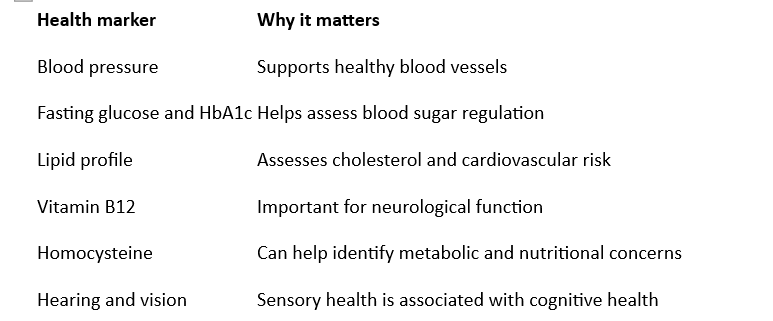
Consider a proactive approach to understanding your health markers rather than waiting for symptoms to appear.
9. Social Connection: Your Relationships Matter

We often think about brain health in terms of food, supplements, and exercise. But there is another important factor we shouldn’t overlook: human connection.
Social isolation and loneliness have been associated with an increased risk of cognitive decline and dementia.
Meaningful relationships provide emotional support, intellectual stimulation, and opportunities for communication and engagement.
Make time for:
- Regular catch-ups with friends.
- Family activities and intergenerational connections.
- Community groups and volunteer opportunities.
- Book clubs and educational groups.
- Hobbies and activities you enjoy with others.
Don’t underestimate the value of laughter, conversation, and feeling connected to a community.
Your brain benefits when you stay engaged with the world around you.
10. Start Today: Your Brain Health Action Plan
The good news is that supporting your brain doesn’t require a complicated wellness routine.
Small, consistent lifestyle changes can make a meaningful difference to your overall health and may help reduce dementia risk.
Here is a simple daily checklist to get started.
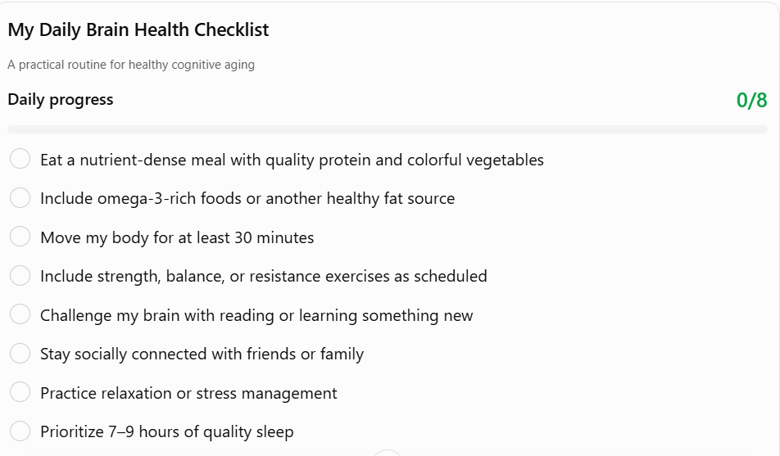
You don’t need to do everything perfectly. Start with two or three changes and build from there.
A Final Word: Your Brain Health Is Worth Investing In

For too long, Alzheimer’s disease has been viewed as something we simply have to accept as we get older.
But research is changing the conversation.
We are learning more about the relationship between hormones, metabolism, cardiovascular health, nutrition, sleep, and cognitive aging.
For women, particularly those approaching or navigating menopause, midlife is an important opportunity to become more proactive about brain health.
We cannot change our genetics, and no lifestyle program can guarantee protection against Alzheimer’s. However, we can take meaningful steps to support our brain, improve our metabolic health, and reduce several known risk factors for cognitive decline.
My philosophy is simple: Don’t wait until you have a problem to start investing in your health.
The choices you make today can help build a healthier foundation for tomorrow.
Your brain deserves the same attention you give your heart, muscles, gut, and overall well-being.
Let’s make brain health a priority—not just for longevity, but for living well, thinking clearly, and enjoying life for years to come!
Thinking About Your Risk for Alzheimer’s Disease? Five Questions To Consider

- How old are you?
Age is the biggest known risk factor for Alzheimer’s. Most people with Alzheimer’s develop the disease when they are 65 or older, with less than 10% of cases occurring before then. As a person ages past 65, their risk of Alzheimer’s increases. About one in 13 people age 65 to 84 and one in three people 85 and older are living with Alzheimer’s.
- Does Alzheimer’s run in your family?
Family history is also an important risk factor. People with a parent or sibling diagnosed with Alzheimer’s have a higher risk of developing the disease than those who don’t have family members with the disease.
- What’s your lifestyle?
There are some risk factors, like age, that you cannot change. However, there may be ways to promote better brain health and reduce your risk of Alzheimer’s by addressing certain lifestyle factors, including:
- Unmanaged chronic health issues, such as high blood pressure
- Physical inactivity
- Unhealthy diet
- Alcohol misuse
- Smoking
- Not getting enough sleep or not sleeping well
- Social isolation
- Lack of mental stimulation
Researchers cannot yet say for certain whether making positive changes in these areas can prevent dementia, but doing so is beneficial to living a healthier lifestyle overall
- What medical conditions do you have?
Having certain medical conditions may increase your risk of developing Alzheimer’s. For example, cardiovascular disease, which includes conditions such as heart disease, stroke, and coronary artery disease, affects the heart and blood vessels and has been linked to Alzheimer’s.
- What about biomarkers?
Biomarkers are characteristics we can measure that help show what’s happening inside the body. Scientists have identified several biomarkers associated with Alzheimer’s. While testing for biomarkers can provide some information about a person’s risk, these tests can’t tell for sure whether or not someone will develop the disease. Right now, many of these biomarkers are used mostly in research settings or to help doctors in diagnosing the disease.
- Genetic variants are a type of biomarker that have been associated with Alzheimer’s risk. Variants in the apolipoprotein E (APOE) gene are one example. A variant called APOE ε4 has been associated with an increased risk of Alzheimer’s in certain populations, while a variant called APOE ε2 may offer some protection against Alzheimer’s in others.
- Levels of the proteins beta-amyloid and tau NOTE – None of these tests are commonly used to indicate someone’s risk outside of a research setting.
References and Further Reading
For readers who want to explore the science further:
Want to take a more proactive approach to your health and longevity?
I believe understanding your body, monitoring important health markers, and making informed lifestyle choices are essential to aging well.
Stay connected for more practical tips on gut health, hormones, metabolism, nutrition, and healthy aging.
To your optimal health,
Dr. Karen Wolfe
Important note: This article is for educational purposes and is not a substitute for individualized medical advice. Memory changes should be evaluated by a healthcare professional. Menopausal hormone therapy should not be used solely for Alzheimer’s prevention.